
The Kettlebell Swing: One Movement, Decades of Practice
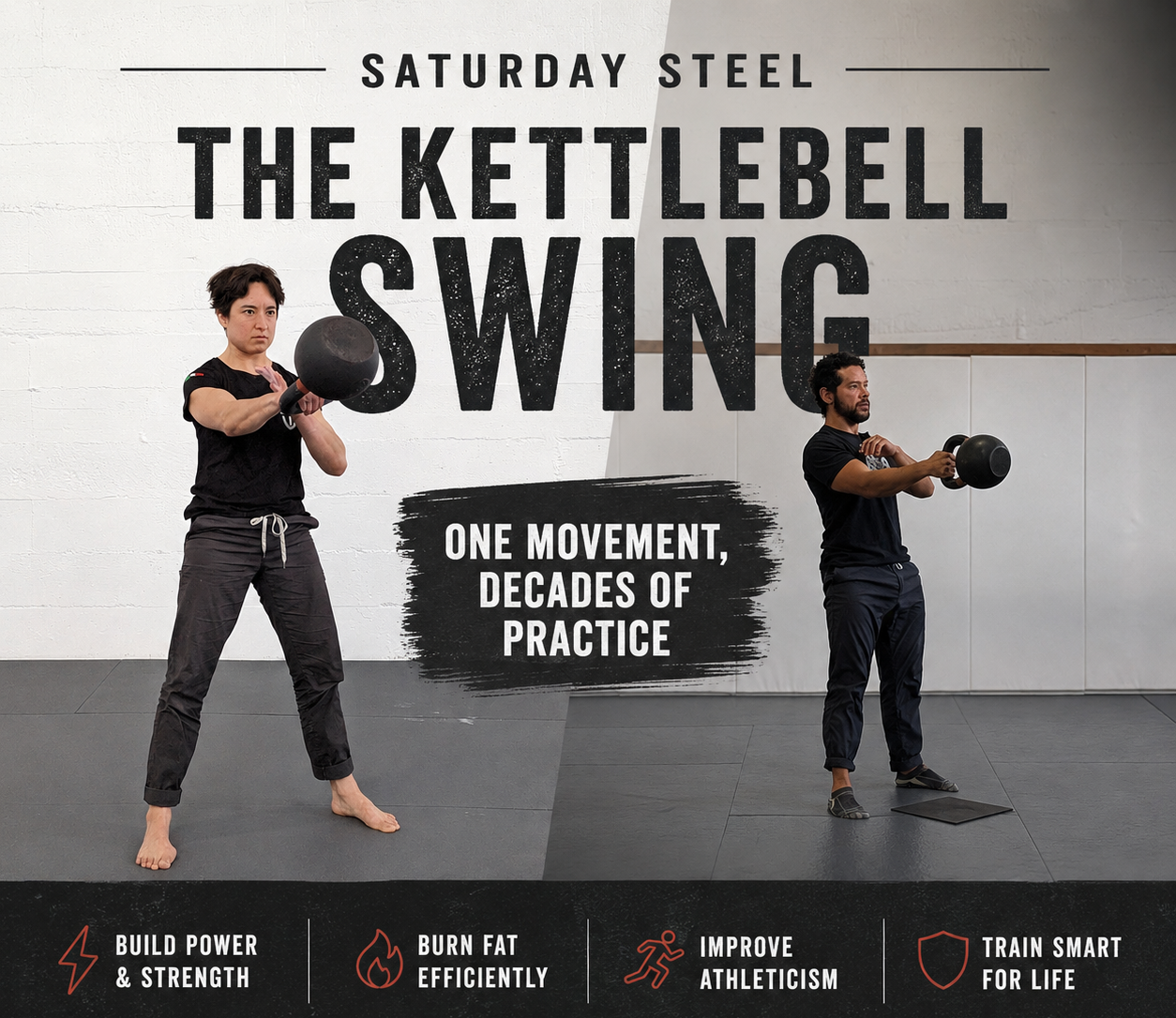
A member asked us before class last week: if you had to pick one movement to teach someone brand-new, and one movement to keep an advanced athlete progressing, would it be the same movement?
Yes. It would be the swing.
If we had to pick one movement to teach a brand-new member and one movement to keep an advanced athlete progressing for decades to come, it would be the same movement. The swing is the most bang-for-buck power exercise we know — for the beginner standing at the bell for the first time, and for the lifter who has been practicing for twenty years.
Why the swing earns the title
Mark Reifkind, Master SFB, calls the swing the most beneficial exercise anyone can do. In Kettlebell Simple & Sinister, Pavel Tsatsouline writes that Rif's list of swing benefits includes "superior conditioning, rapid fat loss, explosive hip power, killer grip, various back health benefits, and it is very easy on the knees." Rif adds that the swing is "scalable to a 70-year-old grandmother and to a 20-year-old super athlete."
That scalability is the part most people miss. Most movements have a ceiling, or a floor, or both. The swing has neither. The variables — bell weight, reps per set, total volume, rest interval — scale in every direction without changing the structure of the lift.
What the swing actually is
The kettlebell swing is a ballistic hip hinge. The bell is driven by an explosive extension of the hips, not lifted by the arms. The spine stays neutral throughout — no rounding, no hyperextension. The lats, abs, and glutes stay connected to the bell from start to finish. Every rep is matched with a power breath.
The "what the heck" effects
Kettlebell practitioners call them the WTH effects: results that show up in places you didn't train. Four of them stand out.
Power
Power. The swing trains strength and conditioning in the same session because power production overlaps multiple energy systems. You're not choosing between getting stronger and getting better conditioned. You're getting both, from one movement, in less time than either would take separately.
Strength
&
Muscle
Strength and muscle. Mel is one of the athletes featured in StrongFirst's book Kettlebell AXE, which is built around developing athleticism through the swing. So when she pulled a 315 lb barbell deadlift at 120 lb bodyweight — after more than a year of not touching a barbell — she had a clear answer for what built it. Heavy one-arm swings during her StrongFirst Sinister challenge trained the grip, the hip power, and the posterior chain that the deadlift demanded. She never trained the deadlift specifically that year. The PR came anyway.
Fat Loss
Fat loss. A+A swing protocols — short bursts of work, full recovery between sets — pull primarily from the aerobic energy system, which uses fat as fuel. You avoid the acid buildup of glycolytic "feel-the-burn" work. The training feels almost easy while you're doing it, and over months of consistent practice, body composition tends to follow. We’ve seen many students delight in the composition change they see when they hop onto one of these protocols. 1-2 days per week consistently builds a strong foundation. 3-5 days per week consistently offers those composition changes.
Athleticism
Athleticism. Kettlebell AXE is built on a specific principle: athleticism comes from the speed of muscle relaxation, not just speed of contraction. The swing trains exactly that. You drive hard, then you let go completely — over and over, in a precise rhythm. The carryover shows up in sprinting, in jumping, in any movement where you need to produce force and then immediately absorb or redirect it.
The swing for the BJJ athlete
I'll get personal here for a minute. I regularly spar with serious competitors decades younger than me, and I bring power they have to account for. They're shocked when they find out my age. They ask what I do.
The answer is swings.
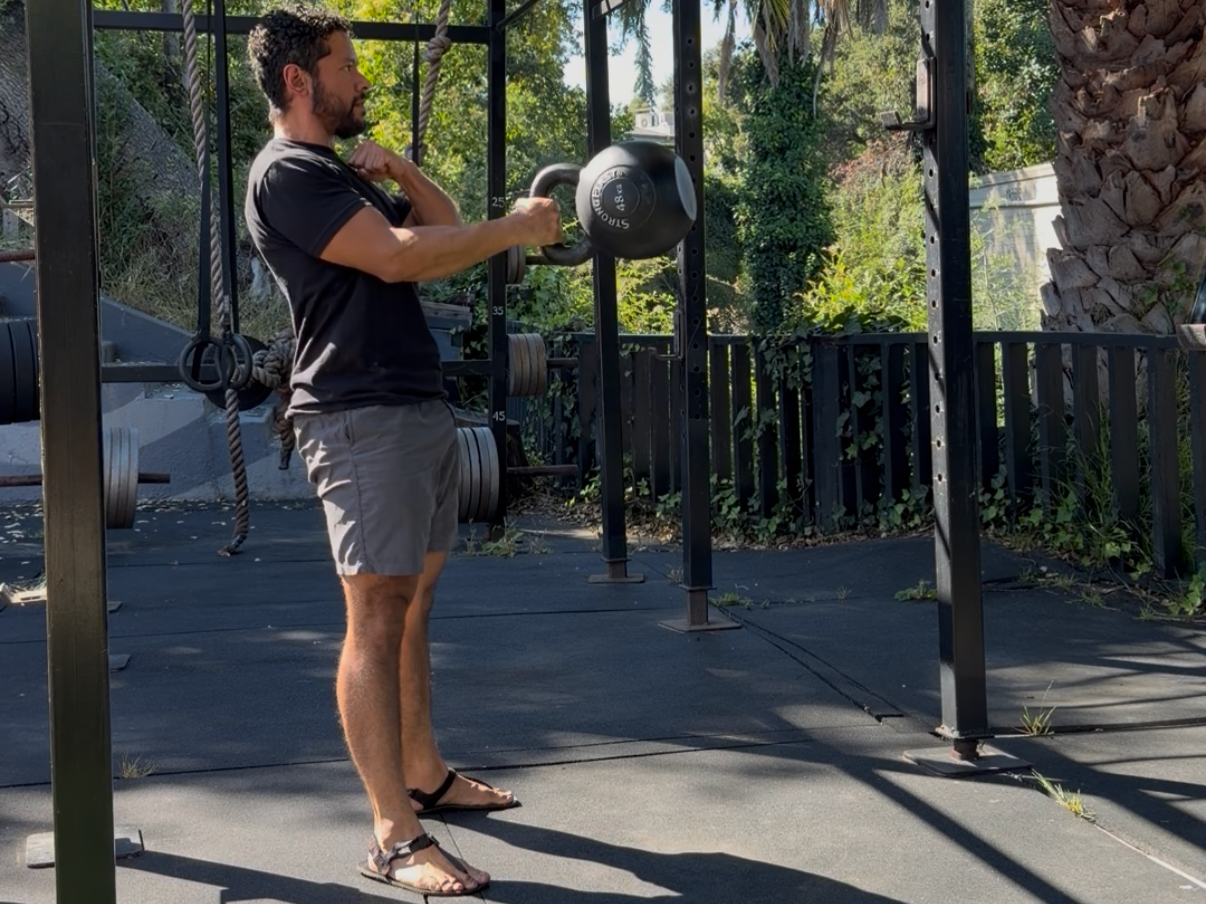
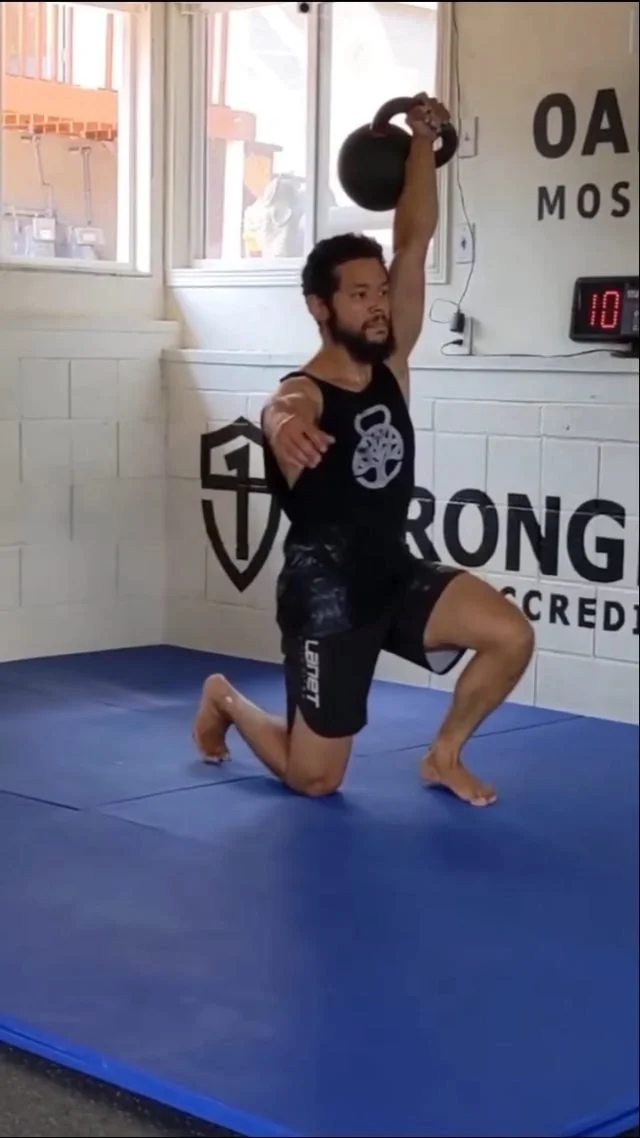
Luis with the 48kg. Years of practice, built one rep at a time from the deadlift up.
For grapplers, the swing is one of the cleanest pieces of GPP work you can do:
It builds hip power without crushing recovery.
It builds the grip you actually need on the mat.
It builds posterior chain endurance for scrambles and for the bottom positions where most athletes tire and start losing technique.
It does all of that without putting more mileage on shoulders, knees, and necks that are already taking a beating from rolls.
The swing for the long-mileage athlete
For veteran endurance athletes — runners, cyclists, hikers, climbers — the swing is an elegant substitute or complement for road training when the knees and hips have accrued enough mileage. You keep the engine improving. You drop the wear and tear on the parts.
Mel is the case study here too. While she was doing her Sinister training, she barely ran for over a year. When she put her running shoes back on, she expected to feel rusty. Instead she felt like she hadn't skipped a day. Powerful legs, strong lungs, a solid core, and well-conditioned aerobic capacity made running feel almost easy after a long break.
That’s the long game. Build the engine in a way that lets you keep using it.
Before you swing: learn it right, from someone certified to teach it
Everything above depends on one thing: a swing done well. A sloppy swing doesn't build power. It builds bad habits and, eventually, a sore back. So before you put this program to work, put the time into the foundation.
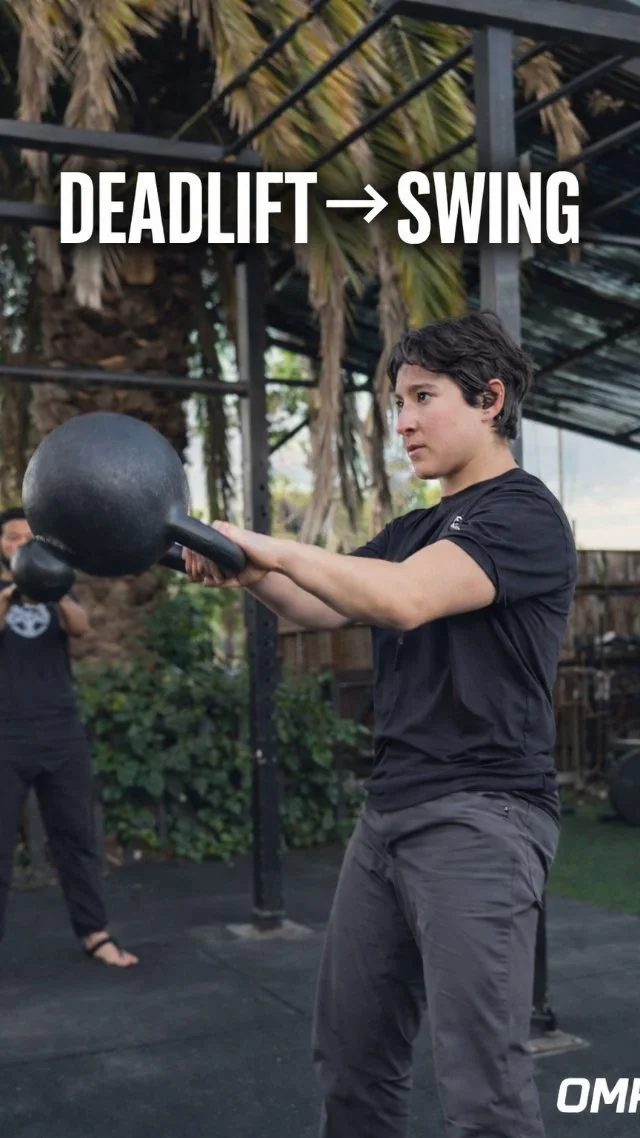
Start with the deadlift. The kettlebell deadlift teaches the hinge under load with a stationary bell. It's where you learn to load your hips instead of your lower back, keep a neutral spine, and connect your lats to the bell. The swing adds speed and a ballistic component on top of that pattern. Skip the deadlift and you're trying to learn two things at once, and you'll learn neither well.
Then the two-hand swing. Once the hinge is solid, the two-hand swing teaches you to project force through the hips, time the power breath, and let the bell float rather than lifting it with your arms.
Then the one-arm swing. The program below uses one-arm swings. A one-arm swing asks for more from your grip, your lats, and your trunk, which has to resist rotation on every rep. It's a big step up, and it rewards patience.
Each step builds on the one before, and each has details that are hard to see on yourself. You can't watch your own hinge from the side. You can't feel whether your bell is floating or whether you're muscling it with your shoulders. That's what a coach is for.
We strongly recommend learning these movements from a StrongFirst-certified instructor. StrongFirst instructors earn that certification through a demanding course and a strict skill standard, and they're trained to see the small errors that become big problems under load.
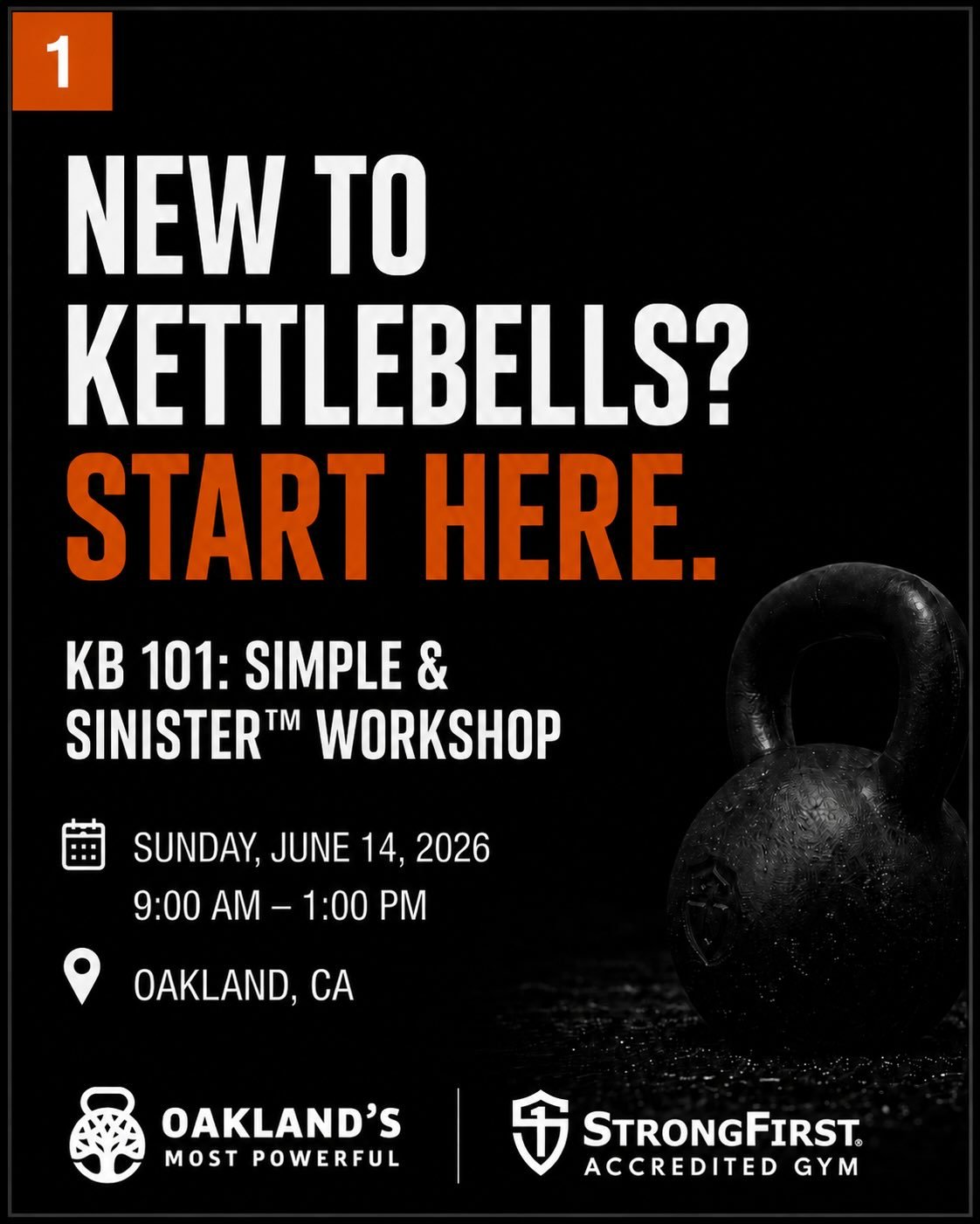
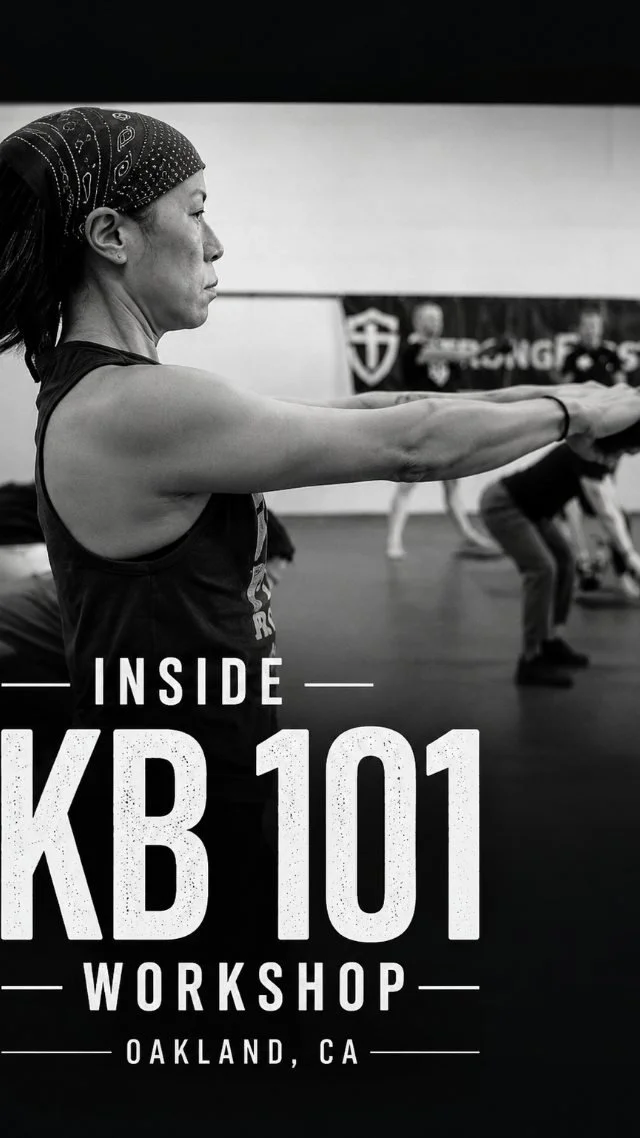
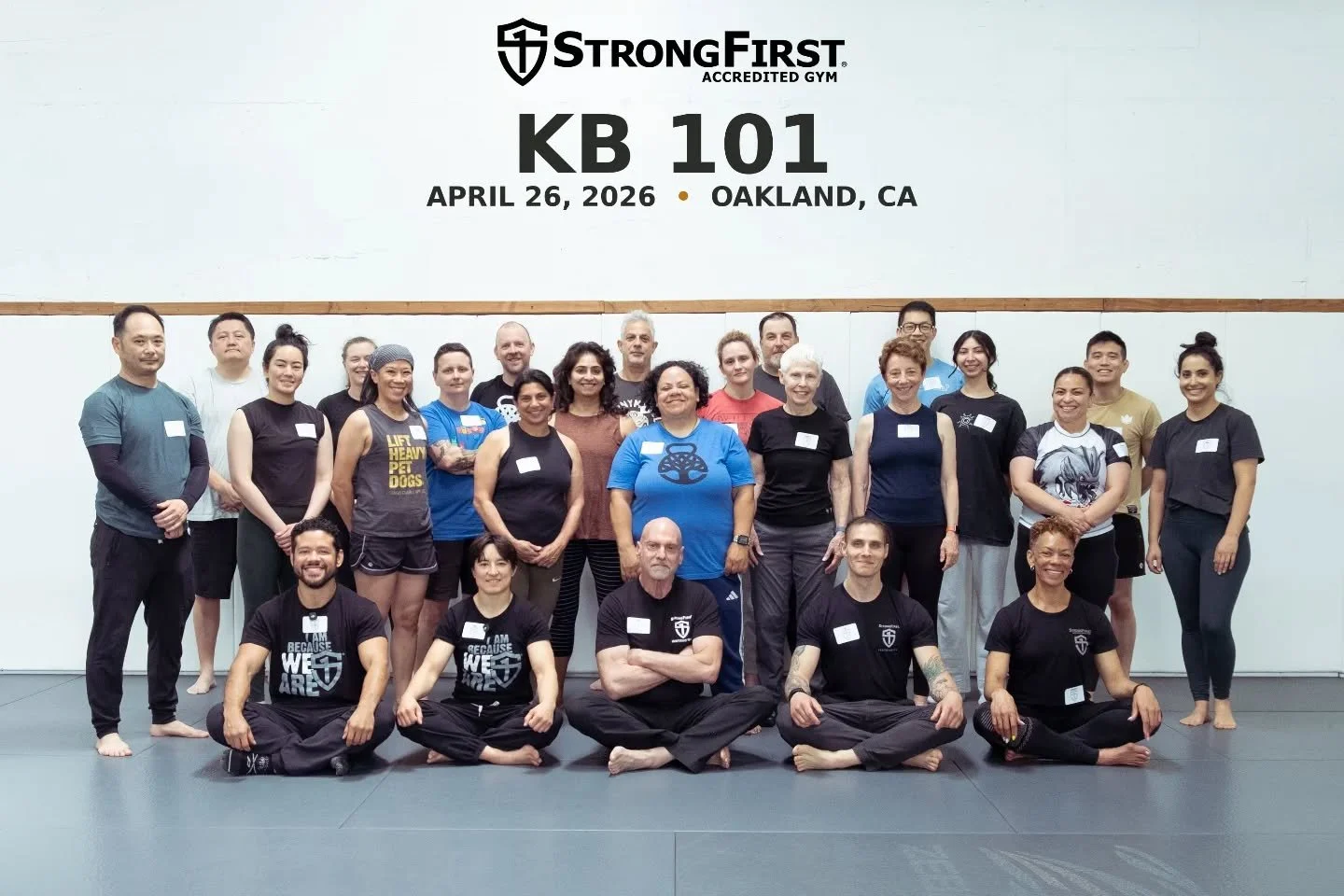
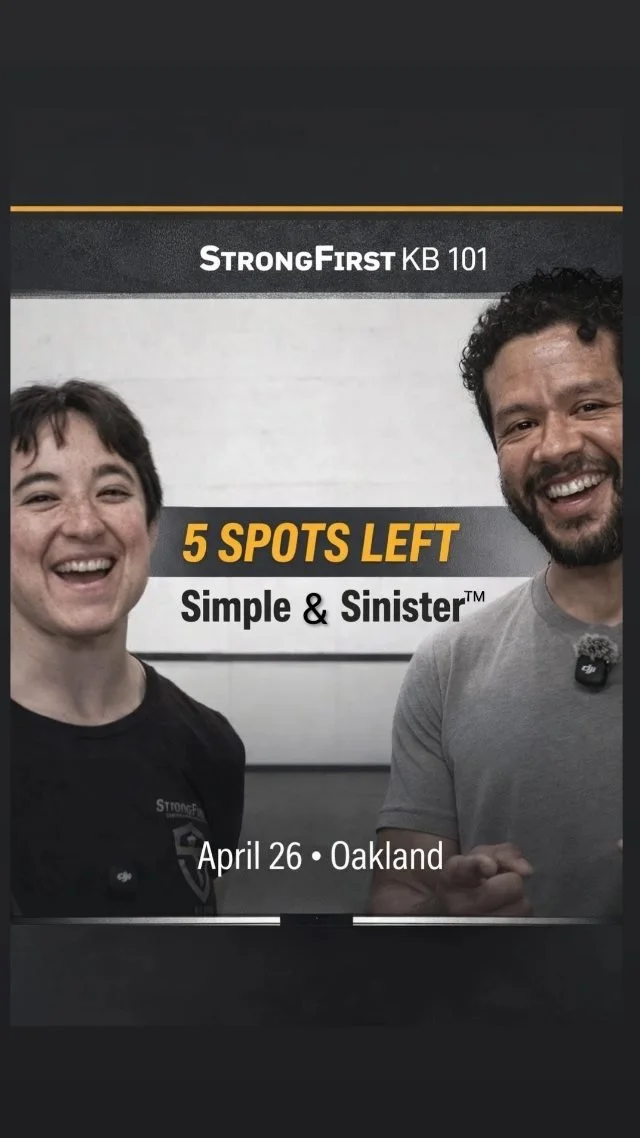
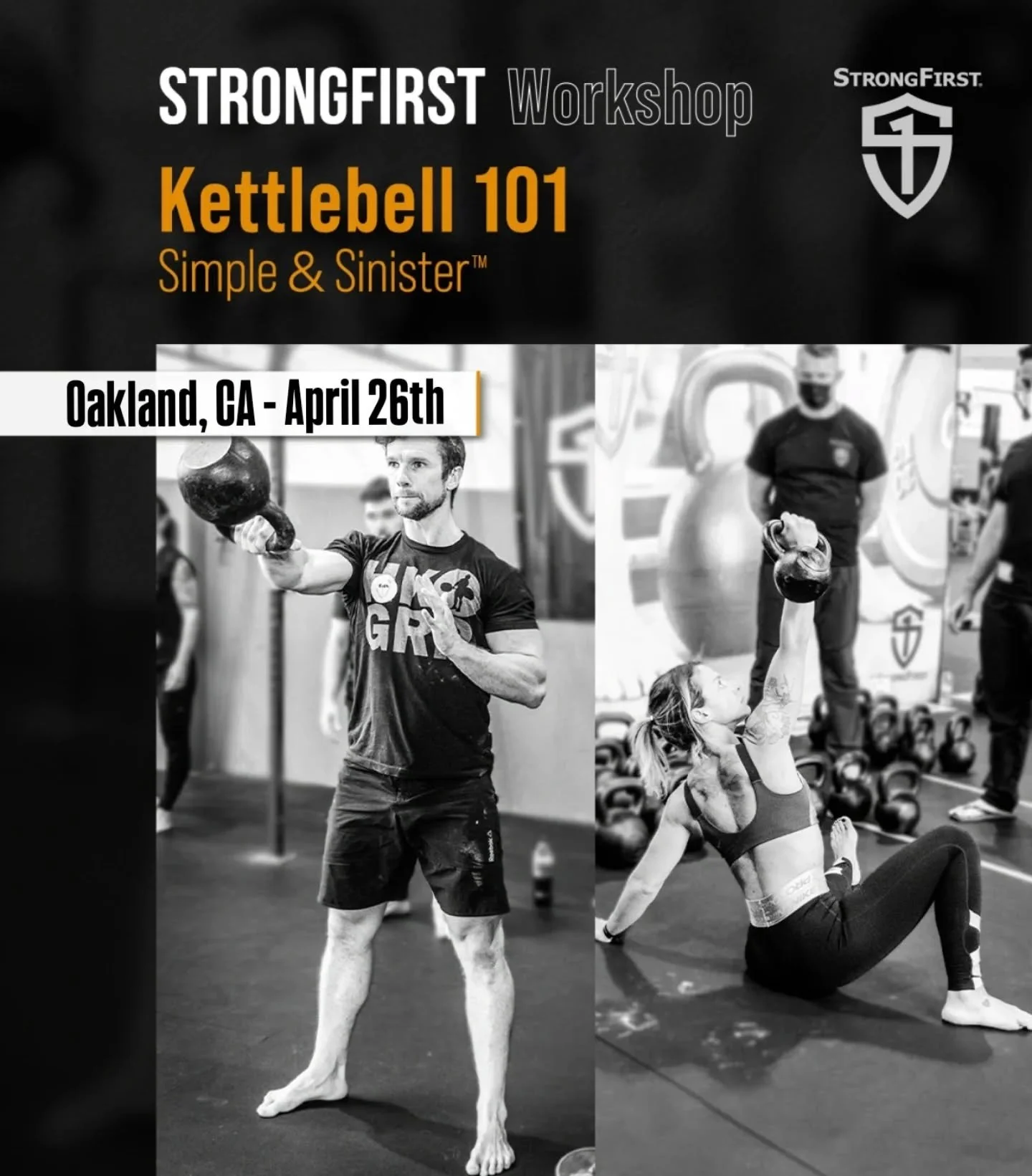
The most direct way to get there is a StrongFirst KB 101: Simple & Sinister Workshop. In one session we take you through the deadlift, the two-hand swing, and the one-arm swing step by step, with hands-on coaching and the corrections you need to practice safely on your own. You'll leave knowing exactly what a good rep looks and feels like, and how to keep it that way. Check out our upcoming StrongFirst workshops HERE.
Learn it right once, and you get to practice it for the rest of your life.
A minimalist program: A+A swings
If you want a protocol for using swings to build athleticism across the board, this is where to start:
Swing a medium-heavy bell for 3 to 5 reps on the minute
Build up to about 100 total reps per session
Technical proficiency comes first — bell choice is key
Mind the StrongFirst stop signs: form breakdown, speed loss, breathing falling apart, or losing the connection between the bell and your body
Train to success, not to failure — the session ends when speed or technique start to drop, not when you're already cooked
That's the program. The reason it works for beginners, intermediates, and professional athletes alike is that the structure stays the same. The variables scale.
The takeaway
The swing is not a workout. It's a practice. You don't crank out a session and check it off the list — you spend years getting better at it, and the better you get, the more it gives back.
If you're new to OMP, the swing is the second movement we teach you, right after the deadlift. If you've been training with us for a while, it's the one we keep coming back to. That's not because we ran out of ideas. It's because there isn't much else worth doing.
If you want to learn the swing the right way — or rebuild it from the ground up — Strong Fundamentals runs Wednesdays at 12pm and Saturdays at 9am at the gym. Come spend eight weeks with us. We'll build the pattern, drill the cues, and send you out with a movement you can practice for the rest of your life.
Not sure where to start? Book a free 20-minute consultation and we’ll help you find the right entry point for where you are right now.
Or email us at info@ompgym.com and we’ll get you set up.
Power to you!
— Luis & Mel
Co-Founders, Oakland’s Most Powerful
You May Also Like:
Upcoming Workshops & Events:
OMP on Instagram:
If we could teach a brand-new member only one movement, and keep an advanced athlete progressing with only one movement, it would be the same one: the kettlebell swing. Here's why it scales from day one to decades in, and how to learn it the right way, starting with the deadlift.